
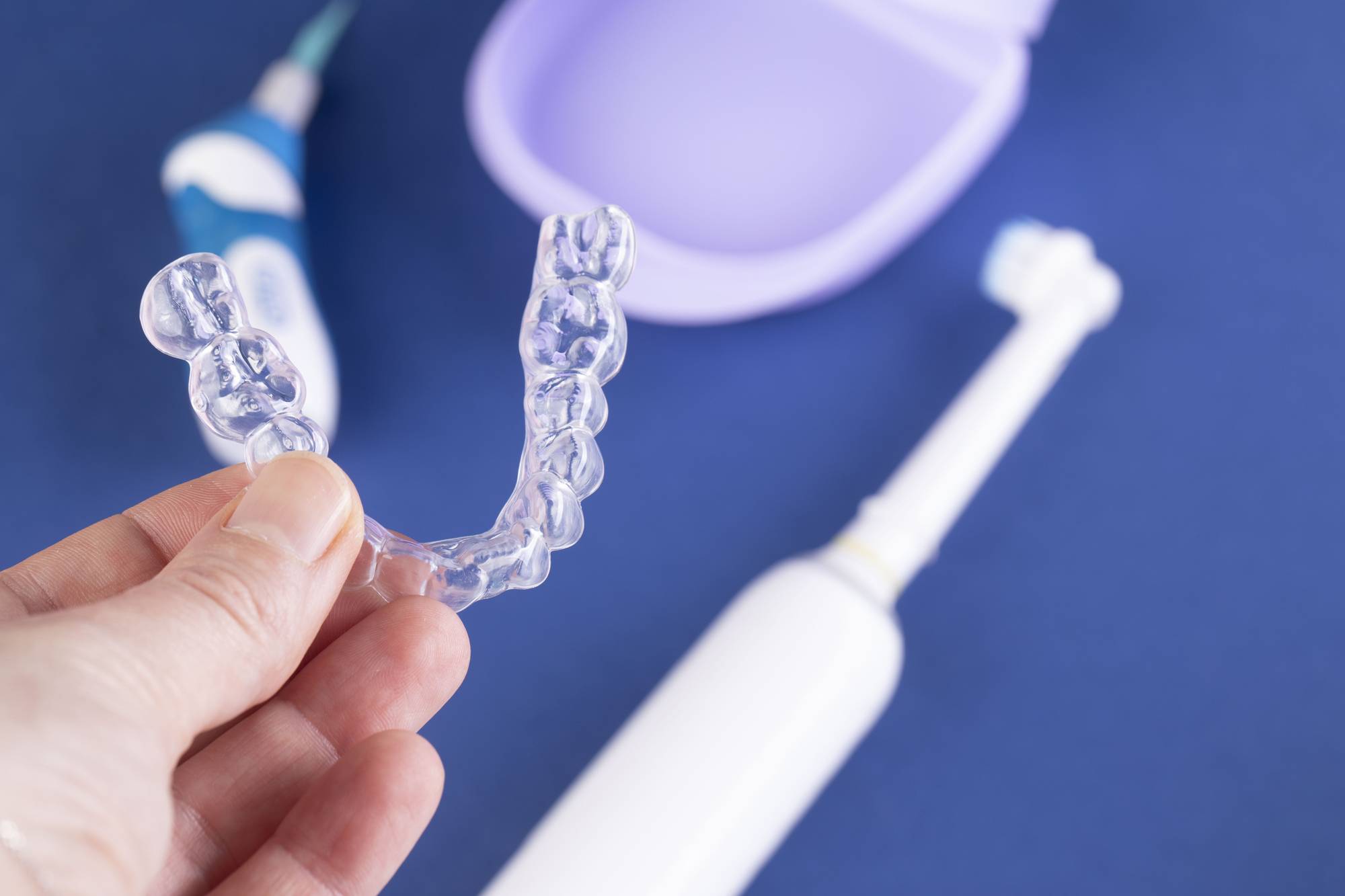
If your Invisalign aligners appear cloudy and lack their initial shine, there is no need to worry. This is a common issue that many patients experience, and it is natural to wonder what causes it and how to restore their appearance. This article will explore the problem of cloudy aligners, uncover the underlying reasons, and offer simple yet efficient solutions to maintain your aligners’ cleanliness and overall appearance throughout your treatment process.
- Cloudy Invisalign aligners are most often caused by using toothpaste (especially whitening formulas) to clean them.
- The best cleaning method is fragrance-free antimicrobial soap and a dedicated soft-bristle toothbrush.
- Scrub each aligner for 15–20 seconds, then rinse thoroughly with lukewarm water.
- Consistent daily cleaning prevents plaque buildup, bacteria growth, and discoloration.
- If cloudiness persists, contact your orthodontist — some degree of wear is normal as you progress through trays.
Cloudy Invisalign Aligners: Causes, Fixes, and Prevention in 2026
💡 Cloudy Invisalign aligners can result from improper cleaning methods, particularly using toothpaste with bleaching agents.
Cloudy aligners can be frustrating, especially when you’re committed to your orthodontic treatment and want your aligners to look their best. You may have noticed a lack of clarity or a film on the surface of your aligners, affecting their transparency and overall appearance. The good news is that this problem is well understood, and solutions are straightforward once you know what to look for. But what exactly causes this cloudiness, and how can you prevent it from happening in the first place?
Clear aligner therapy has grown significantly in popularity. Align Technology, the maker of Invisalign, reported $4.0 billion in revenue for 2025, and the company continued its strong trajectory into 2026, with first-quarter results driven by high-volume demand for its core Invisalign product line. These figures reflect just how widely patients around the world have embraced this orthodontic solution. With so many people wearing aligners every day, proper care and maintenance have never been more important — and cloudy aligners are one of the most frequently reported cosmetic concerns among wearers.
According to Chacon Orthodontics’ 2026 guide to invisible aligners, clear aligner technology has matured significantly, but patient education around daily maintenance still lags behind adoption rates. Understanding exactly why your aligners turn cloudy — and how to stop it from happening — is one of the most practical things you can do to protect your investment and keep your smile transformation on track.
The Culprit Behind Cloudy Aligners
The main culprit behind cloudy Invisalign aligners is improper cleaning methods. While it may be tempting to use regular toothpaste to clean your aligners, it’s important to note that toothpaste — especially formulas containing bleaching or whitening agents — can cause cloudiness and compromise the quality of the plastic material.
When toothpaste interacts with the aligner material, it can lead to a chemical reaction that affects their transparency. The abrasive particles found in most toothpastes are designed to polish tooth enamel, but that same abrasive action creates tiny micro-scratches on the smooth surface of your aligners. Over time, these microscopic scratches accumulate and scatter light differently, giving the aligner a foggy or hazy appearance that is difficult to reverse. This cloudiness can diminish the discreet nature of the Invisalign system — one of its most valued features.
Beyond toothpaste, other common contributors to cloudy or discolored aligners include:
- Drinking colored beverages while wearing aligners — Coffee, tea, red wine, and sodas can all stain the plastic over time.
- Not rinsing aligners when removed — Allowing saliva to dry on the surface creates a film that dulls clarity.
- Using scented or oil-based soaps — Certain soap ingredients can coat or degrade the plastic material.
- Exposing aligners to hot water — Heat can warp or cloud the thermoplastic material used to make Invisalign trays.
- Inconsistent cleaning routines — Skipping cleaning sessions allows plaque and bacteria to build up, leading to a yellowish or cloudy haze.
As Blue Ridge Orthodontics explains in their ultimate guide to cleaning Invisalign aligners, many patients unknowingly damage their aligners in the first few weeks simply by reaching for the nearest toothbrush and toothpaste without realizing the harm it can cause. Understanding why these habits are problematic is the first step toward adopting a better routine.
The Recommended Cleaning Method
💡 The recommended way to clean aligners is to use fragrance-free antimicrobial soap, such as hand soap or dish soap, to avoid degrading the plastic.
Now that we understand the problem, let’s explore the solution. Following the recommended cleaning method is essential to maintaining your Invisalign aligners’ clarity and aesthetic appeal. Incorporating simple steps into your daily routine ensures your aligners stay crystal clear and attractive throughout your treatment.
1. Choose the Right Soap
Opt for fragrance-free antimicrobial soap, such as hand soap or dish soap. Fragrance-free options are preferred because scented soaps often contain oils and additives that can degrade the plastic material of the aligners or leave a residue that clouds their surface. Clear, unscented dish soap is widely recommended by orthodontists as a safe and effective choice.
2. Get an Extra Toothbrush
Use a separate toothbrush exclusively for cleaning your aligners. This toothbrush should have soft bristles and be dedicated solely to maintaining the cleanliness of your aligners — never used on your teeth. Keeping it separate also helps you avoid cross-contamination from toothpaste residue that may linger on a shared brush.
3. Scrub Vigorously Yet Gently
Apply a small amount of fragrance-free antimicrobial soap to your dedicated toothbrush. Scrub the inside and outside of the aligner with gentle yet firm pressure. Ensure you cover every surface to effectively remove any plaque or buildup. Pay particular attention to the ridges and grooves where bacteria tend to accumulate. Remember, the key is to be thorough but gentle to avoid creating those micro-scratches that lead to cloudiness.
4. Time It Right
It only takes around 15 to 20 seconds per aligner to clean them properly. This short investment of time will pay off in the long run, ensuring your aligners remain transparent and visually appealing. Make it part of your morning and evening oral hygiene routine so it becomes second nature.
5. Rinse Thoroughly
After scrubbing, rinse the aligners thoroughly with plenty of lukewarm water to remove any soap residue. Use lukewarm — never hot — water, as heat can warp the thermoplastic material. This step is crucial to prevent any residual soap from affecting the clarity of the aligners or leaving an unpleasant taste in your mouth.
6. Let Them Air Dry (When Not in Use)
If you are eating a meal and your aligners will be out for an extended period, give them a quick rinse and let them air dry in their case rather than leaving them exposed. This prevents bacteria from settling on the surface and reduces the chance of odor or discoloration developing between wearings.
💡 Following these cleaning instructions should help maintain a clean appearance and aesthetic throughout the treatment.
As Rick Burns Orthodontics outlines in their professional guide to the best way to clean Invisalign, consistency is the single most important factor in keeping aligners clear and odor-free. It is not enough to clean them occasionally — building the habit of cleaning each time you remove or reinsert your aligners is what produces lasting results.
Additional Tips for Keeping Aligners Crystal Clear
Beyond the core cleaning routine, there are several additional best practices that can help you preserve the clarity of your Invisalign aligners throughout your entire treatment:
- Always remove aligners before eating or drinking anything other than plain water. Even clear beverages like sparkling water with citrus flavoring can introduce acids that dull the plastic over time.
- Brush and floss your teeth before reinserting your aligners. Placing aligners over unbrushed teeth traps food particles and bacteria against the plastic, accelerating staining and clouding.
- Consider using Invisalign’s official cleaning crystals or retainer cleaning tablets for a periodic deep clean. These are specifically formulated to be safe for the aligner material and can help dissolve stubborn buildup without scratching.
- Store your aligners in their case when not in use. Leaving them on a napkin or exposed on a countertop invites contamination and the risk of accidental damage.
- Keep your aligners away from pets. Dogs in particular are attracted to the scent of saliva on aligners, and a chewed aligner is not just cloudy — it’s unusable.
- Avoid eating sugary or acidic foods immediately before reinserting aligners. Even after brushing, acidic residue left in the mouth can transfer to the aligner surface and accelerate surface degradation over a full tray cycle.
- Check your aligners in natural light periodically. It’s easier to spot early-stage cloudiness or staining in natural daylight, allowing you to adjust your cleaning habits before the issue becomes pronounced.
As Blue Ridge Orthodontics emphasizes in their cleaning guide, establishing a daily cleaning routine is especially important for teen patients, who may be more prone to skipping steps or improvising with whatever cleaning product is nearby. The same principles apply equally to adult wearers — good habits formed early in treatment lead to a much more comfortable and aesthetically pleasing experience from start to finish.
What About Cleaning Products to Avoid?
Just as important as knowing what to use is knowing what to avoid. The following products should never be used to clean Invisalign aligners:
- Whitening or fluoride toothpaste — The abrasives and chemical agents cause cloudiness and surface damage.
- Mouthwash containing alcohol — Alcohol can warp or discolor the plastic and degrade its structural integrity over time.
- Bleach or harsh chemical cleaners — Far too aggressive for the delicate thermoplastic material used in aligners.
- Boiling water or dishwasher cleaning — The high heat will permanently warp your aligners, making them unwearable.
- Scented hand soaps or body wash — The fragrance oils and conditioning agents can coat the aligner surface, reducing clarity.
- Denture cleaning tablets with strong effervescent chemicals — While some retainer tablets are safe, traditional denture tablets are often too harsh for Invisalign material and can cause discoloration with repeated use.
Rick Burns Orthodontics’ guide to cleaning Invisalign reinforces that the simpler the cleaning approach, the better — mild soap, soft bristles, and lukewarm water are genuinely all you need for a daily routine that keeps aligners looking new.
How Cloudy Aligners Affect Your Treatment Experience
While cloudy aligners are primarily a cosmetic concern, they can also have subtle effects on your overall treatment experience and confidence. One of the defining advantages of Invisalign over traditional metal braces is the near-invisible nature of the trays — making clear aligners an attractive choice for working professionals, students, and anyone who values a discreet orthodontic solution. When aligners become noticeably hazy or yellowed, that core benefit is compromised.
There is also a practical hygiene dimension to consider. A cloudy aligner is often a sign of accumulated surface deposits — and those deposits can harbor bacteria and contribute to plaque formation on your teeth if the aligner is repeatedly worn in that state. According to Chacon Orthodontics’ 2026 guide to invisible aligners, maintaining clean trays throughout your treatment is directly linked to better oral hygiene outcomes, not just aesthetics. Patients who keep their aligners clean tend to report fewer issues with gum irritation and tooth sensitivity during their treatment cycle.
It is also worth noting that the clear aligner market has expanded considerably. In-office Invisalign treatment costs range from $4,500 to $8,500 in the USA in 2026, making it a significant financial commitment. Proper care of your aligners protects that investment — preventing premature cloudiness, warping, or damage that could necessitate replacement trays and unexpected additional costs.
Frequently Asked Questions About Cloudy Invisalign Aligners
Q: Can I reverse cloudy aligners once they’ve already turned hazy?
A: Unfortunately, cloudiness caused by micro-scratches from toothpaste or abrasive products is generally permanent. The scratches alter the surface at a microscopic level that cannot be polished out at home. The best approach is prevention through proper cleaning. If your current set is significantly clouded, speak with your orthodontist — depending on where you are in your treatment cycle, it may be close to time for your next tray anyway.
Q: How often should I clean my Invisalign aligners?
A: Ideally, you should rinse your aligners every time you remove them and give them a full clean with soap and a soft toothbrush at least twice daily — once in the morning and once before bed. This schedule aligns naturally with your regular tooth-brushing routine and helps prevent buildup from occurring.
Q: Is it normal for aligners to get slightly cloudy over time even with proper care?
A: Some very slight cloudiness can occur naturally as aligners age and are worn consistently throughout the day. Since most Invisalign plans involve switching to a new tray every one to two weeks, this typically isn’t a significant cosmetic issue. Proper cleaning dramatically slows this process and keeps each tray looking its best for as long as you wear it.
Q: Why do my aligners smell bad even when they look clean?
A: Odor is usually a sign that bacteria have accumulated on or inside the aligners, even if the buildup is not visually obvious. This is common when aligners are worn for extended periods without cleaning or when they are worn over teeth that haven’t been thoroughly brushed. Sticking to the recommended cleaning routine and ensuring your teeth are clean before reinserting the trays should resolve the problem.
Q: Can I use baking soda to clean my aligners?
A: Baking soda is occasionally suggested as a natural cleaning agent, but it should be used with caution. While it is gentler than most toothpastes, it is still mildly abrasive. If you choose to use it, do so sparingly and infrequently — it should not replace your regular fragrance-free soap cleaning routine.
Q: Are there any newer cleaning products specifically designed for clear aligners?
A: The market for aligner care products continues to grow alongside the popularity of clear aligner therapy. Align Technology’s official Invisalign cleaning crystals remain a widely recommended option, and several third-party retainer cleaning tablets have gained popularity. Always check that any product you use is labeled safe for clear aligners or retainers and does not contain alcohol or harsh chemicals.
Q: What is the fastest way to clean Invisalign aligners when I’m short on time?
A: If you are pressed for time, the minimum effective step is a thorough rinse under lukewarm running water, followed by a brief 10-second gentle scrub with a wet soft-bristle brush — even without soap. This removes loose debris and surface saliva deposits. However, this should be a short-term workaround only. A full clean with fragrance-free soap for 15 to 20 seconds per aligner should always be your goal at least twice daily.
Q: Does wearing aligners for longer than recommended make them cloudier faster?
A: Yes, wearing a single tray for longer than your orthodontist’s prescribed schedule — typically one to two weeks — will naturally result in more surface wear, more bacterial accumulation, and increased cloudiness. If your treatment plan calls for a tray change on a specific schedule, adhering to that schedule is both medically and cosmetically beneficial. Wearing an overdue tray also reduces its effectiveness at applying the right pressure for tooth movement.
Q: Can hard water affect how clear my aligners look?
A: Hard water contains minerals like calcium and magnesium that can leave deposits on surfaces — including aligner trays. If you live in an area with hard tap water and notice a chalky or white film on your aligners after rinsing, try using filtered or distilled water for your final rinse. This can help reduce mineral buildup and keep your trays clearer between cleanings.
Q: Should I clean my aligner case as well?
A: Absolutely. Your aligner case can harbor bacteria, mold, and odor if it is not cleaned regularly. Rinse your case with lukewarm water and mild soap every few days, and allow it to fully air dry before placing your aligners inside. A dirty case can recontaminate freshly cleaned aligners and contribute to both cloudiness and unpleasant odors.
Proper Maintenance and Cleaning Are Key
Proper maintenance and cleaning are vital to ensure a successful treatment journey for Invisalign aligners. Cloudy aligners can be a common issue, but with the recommended cleaning method, you can say goodbye to this problem and enjoy the benefits of a clear, aesthetic smile throughout every stage of your treatment.
Remember: improper cleaning methods, particularly toothpaste with bleaching agents, are the leading cause of cloudy aligners. To avoid this, choose fragrance-free antimicrobial soap and use a separate soft-bristle toothbrush dedicated solely to your aligners. Vigorously yet gently scrub the inside and outside of each aligner for around 15 to 20 seconds, ensuring you cover all surfaces. Afterward, rinse the aligners thoroughly with lukewarm water to remove any soap residue before reinserting them.
By following these cleaning instructions consistently, you will maintain the visual appeal of your aligners, promote good oral hygiene, and prevent the buildup of plaque or bacteria. Clean aligners contribute to a healthier mouth and a more effective orthodontic treatment — and they keep the discreet, nearly invisible quality of Invisalign working exactly as intended.
The broader landscape of orthodontic treatment in 2026 offers more options than ever before, from traditional in-office Invisalign to a growing range of at-home alternatives. But regardless of which clear aligner system you use, the fundamental principles of proper care remain the same. Mild soap, a dedicated soft-bristle brush, lukewarm water, and daily consistency are the pillars of a cleaning routine that will serve you well through every tray change until your final result is achieved.
Further Assistance and Questions About Cloudy Invisalign
💡 If you have any additional questions or concerns regarding the care and maintenance of your Invisalign aligners, don’t hesitate to seek assistance. Leave a comment on our blog, and our team at SmileHaus Orthodontics in South Pasadena will be more than happy to provide you with the necessary guidance and support. We value your feedback and are committed to helping you achieve a successful Invisalign treatment experience.
*Disclaimer: This article is for informational purposes only and should not replace professional advice. Consult your orthodontist or dental professional for personalized guidance specific to your orthodontic treatment.*